Kauaʻi’s county lifeguards watch ten beaches from twelve towers, every day from 8 a.m. to 6 p.m. Everywhere else, and at those ten outside those hours, nobody is watching the water. That matters more here than on most coasts. Three in four people who drown on Kauaʻi are visitors, the Kauai Lifeguard Association says, and the swells that reach the island have crossed open ocean with no continental shelf to slow them, which is why the state Health Department warns that Hawaiʻi’s shorebreak can be dangerous “even when the surf is relatively small.”
The lifeguards’ own rule is short: swim at a guarded beach, and ask the lifeguard before you go in. Below is every tower and what the lifeguards say about its water, what changes on the North Shore from October to April, the places with no lifeguard at all, and how to read the day’s warnings. Whether a beach park is open after the September storm is on what is open on Kauaʻi.
The ten beaches with a lifeguard
The Kauaʻi Fire Department’s Ocean Safety Bureau schedules every tower seven days a week, from 8 a.m. to 6 p.m.; a beach park closed since the September storm may have no guard, and what is open on Kauaʻi has the parks. In 2023 its lifeguards made 605 rescues, 188 of them from jet skis, and 8 people drowned on the island, by the bureau’s own figures as Kauaʻi Now reported them.
| Beach | Side | Towers | What the lifeguards say about it |
|---|---|---|---|
| Keʻe Beach | North Shore, the end of the road | 1 | A reef-sheltered lagoon, a summer snorkel. In winter the swells “can get huge and become dangerous.” Inside Hāʻena State Park, by reservation. |
| Hāʻena Beach Park | North Shore | 1 | Summer is “generally the safest time to swim”; in winter it is “often too dangerous to swim,” with a dangerous shorebreak. |
| Hanalei Bay: Waiʻoli (Pine Trees) | North Shore | 1 | A surf break. In winter it “can be very dangerous due to the strong currents and high surf conditions.” |
| Hanalei Bay: the pavilion | North Shore | 1 | Families, swimming, surfing and bodyboarding. On 5 and 6 November 2026, with no swimming advised at Keʻe and Hāʻena, the county permitted Hanalei swimmers only here or at the pier; on the biggest days it has advised no swimming in the whole bay (24 March 2025; 11 and 12 November 2026). |
| Wanini | North Shore, beside ʻAnini | 1 | The newest tower, opened 15 October 2026, over the Back Channel, “known for strong currents and a history of drownings.” |
| Anahola Beach Park | East side | 1 | Behind an outer reef and family-friendly; strong currents at the river mouth, where no lifeguard is stationed. |
| Keālia Beach | East side | 1 | Rough in the trade winds, with strong currents and Portuguese man-o-war. Ask the lifeguard before you go in. |
| Lydgate Beach Park | East side, by the Wailua River | 1 | Protected pools for beginner swimmers and children; jellyfish blown in on the trades; river debris in the rainy months. Its pools after the storm: what is open. |
| Poʻipū Beach Park | South shore | 2 | The busiest beach all year. The Poʻipū tower watches the protected pool; Nukumoi, the busier, most of the snorkelers and surfers. Treat Brennecke’s, at the east end, as unguarded: its safety board says the guards cannot see it. |
| Salt Pond Beach Park | South shore, Hanapēpē | 1 | A sheltered bay for swimming with children; open to the trade winds and the summer south swells. The park after the storm: what is open. |
| Kekaha Beach Park | West side | 1 | The island’s most westerly guarded beach. Dangerous shorebreak over shallow sandbars, and swells that “can become double to triple overhead.” |
Both published lists of the towers predate the newest. The state Health Department’s list of lifeguarded beaches (last changed 15 June 2026) and the lifeguard association’s tower map each show eleven towers, without Wanini, which the county opened on 15 October 2026; with it the island has twelve. The Health Department lists every Kauaʻi tower as staffed Monday to Sunday, 8 a.m. to 6 p.m., the hours the county set on 1 May 2024 and repeated for Wanini. The association’s entry for Kekaha still says “9am until 5pm.” We go by the county.
A tower watches its own stretch of water. At Anahola the association’s own notes put the river mouth outside it, and on a long beach like Hanalei’s two miles of sand, the guarded water is the water in front of the tower. If you need help and nobody is in the tower, the Health Department’s instruction is to call 911 for lifeguard services.
Winter on the North Shore
From October to April the North Shore is a different coast. The big swells come out of the north and northwest, driven by Pacific storms to the north, and the lifeguards’ notes for Hāʻena say what that means: in summer the beach is safest, and in winter it is “great for walking the sand but please read signage as it is often too dangerous to swim.” Go Hāʻena, which sells Hāʻena State Park’s reservations, puts Keʻe the same way: “Expect rough ocean October to April. Year round, lifeguards may close the beach if unsafe.”
The state Health Department’s statewide calendar starts winter a month later, running it from November through April, and its winter line for the north shores reads “Consistent huge and dangerous swells.” Kauaʻi’s lifeguards and Go Hāʻena both count from October, and so do we: the association’s notes for Kekaha put the northwest swells “during October through April.”
What the county does on a big day. It names the beaches. On 5 November 2026 the Ocean Safety Bureau advised no swimming or other water activities at Keʻe, Hāʻena and Wanini for high surf and strong currents, and on 6 November at Keʻe and Hāʻena. Both days it added the line to remember on the North Shore in winter:
“For those swimming in the Hanalei Bay area, swimming is permitted only at the Hanalei Pavilion lifeguard tower or Hanalei Pier.”
On the biggest days it goes further. On 24 March 2025, in a High Surf Warning with surf of 22 to 26 feet forecast on north-facing shores, it advised no swimming at every North Shore beach from ʻAnini westward and posted warning signs. On 11 and 12 November 2026, under a High Surf Advisory, it advised no swimming or other recreational ocean activities along all north- and west-facing shores.
So the winter plan for the North Shore is Hanalei Bay at the pavilion tower or the pier, on a day the lifeguard says yes, and the rest of the coast for walking and watching. Keʻe is reservation-only, booked a month ahead (Hāʻena State Park reservations), and a winter reservation can land on a day its lifeguards close the water. The south shore faces away from the winter swells: the Health Department’s winter calendar gives south shores “flat-to-small waves,” which is why our snorkeling page sends winter snorkelers to Poʻipū.
When the road floods, the towers past it close. The North Shore has one road. On 18 June 2026 the county closed the Keʻe and Hāʻena towers for flooding at Mānoa Stream on Kūhiō Highway: “Lifeguard services are not available at these locations until further notice.” On 20 July 2025, with the highway closed near the Hanalei Bridge, its notice read: “all lifeguard towers except for Hanalei Bay are closed.” A day the highway or the bridge closes can be a day the beaches past it have no lifeguard, whatever the surf. What is open on Kauaʻi has the road.
Wanini, the newest tower. Wanini, beside ʻAnini, is home to what the county calls the Back Channel; its 2024 rescue notice calls ʻAnini’s back channel “Sirens,” the locals’ name. Wanini’s tower went up on 15 October 2026 and is staffed from 8 a.m. to 6 p.m. every day, in place of the roving patrol that covered the area after the 2018 North Shore floods. On 26 December 2024, in high surf, two kayakers were caught in ʻAnini’s back channel at dusk; a lifeguard on a jet ski pulled one out, and after dark a firefighter paddled out to the other, on the reef, and called him in to shore.
Summer, the south shore and the east side
Summer moves the surf; it does not stop it. The south shore takes its swells from May through September, the lifeguard association’s notes say, when Poʻipū’s Nukumoi tower sees “south and easterly swells creating good surfing conditions.” Kekaha takes both seasons, the south swells in summer and the northwest swells in winter, and its shorebreak over shallow sandbars is dangerous in either.
The east side has the trade winds all year. The Health Department’s calendar gives east shores the same line in summer and winter: “Strong trade winds can create large, rough waves.” Keālia is known for its rough water in the trades and for a steady run of Portuguese man-o-war, and Lydgate can have jellyfish blown in on the wind. Man-o-war turn up most on bays and beaches in strong onshore wind, the Health Department says, and a dead one on the sand still stings. Of the three east-side towers, the family ones are Anahola’s reef-protected beach, away from its river mouth, and Lydgate’s protected pools; whether Lydgate’s pools are open after the storm is on what is open on Kauaʻi.
Where no one is watching
Ten guarded beaches leave most of Kauaʻi’s shore unguarded, including some of its most famous: Tunnels (Makua), next door to Hāʻena Beach Park; Lumahaʻi, west of Hanalei; Secret Beach (Kauapea), near Kīlauea; Shipwrecks (Keoneloa), along the coast from Poʻipū; and everything past Kekaha and past Keʻe. At an unguarded beach the lifeguard association’s advice is to learn to spot a rip current from the shore before you go in (below). Ours is simpler: on a day the lifeguards close the guarded beach down the road, the unguarded one beside it is no safer.
Hanakāpīʻai and the Nā Pali. Two miles along the Kalalau Trail from Keʻe, Hanakāpīʻai Beach has no lifeguard, and the state’s trail page warns, in capitals:
“DROWNINGS OCCUR HERE REGULARLY!”
The state does not recommend swimming there at all, for “dangerous rip currents and wave patterns,” and Go Hāʻena’s rule for the hike is to enter the ocean only at Keʻe. There is no cell service along the trail. At Kalalau, 11 miles in, winter surf takes much of the beach. Kalalau Trail permits has the hike, the reservation it takes and the warning sign that once stood at Hanakāpīʻai.
Queen’s Bath. The natural ocean pool on the Princeville shore has an access gate, and the county closes it when the ocean is hazardous. In 2025 it closed the gate on 25 September “through winter,” warning that going in during those conditions “can result in injuries or drownings.” The lifeguard association records a rogue wave there in 2015 that nearly drowned three visitors from Canada. Ask the Ocean Safety Bureau before you count on it.
Rocks, ledges and lookouts. You do not have to swim to be swept in. The Health Department’s rules for the shoreline: never step into the wet rocky zone, where “you could unexpectedly be swept away by a large wave”; never turn your back on the sea for a photograph; and take care at blowholes and lookouts, where high surf reaches ground that looks far from the water. Go Hāʻena warns of waves at Hanakāpīʻai that have hit bystanders on the beach, and the county’s High Surf Warning notices say “large breaking waves could make it dangerous for those standing along the shoreline.”
How to read the day
Ask the lifeguard. The county’s notices end the same way: speak to a county lifeguard at any tower. The lifeguard has watched that water since 8 a.m. and knows where the current is running that day.
Safe Beach Day. The county sends readers to Safe Beach Day’s Kauaʻi page, which rates nine of the guarded beaches Caution, High Hazard or Extreme from the surf, the weather and the lifeguards’ reports, and carries the Weather Service’s alerts. On the morning of 11 November 2026, under a High Surf Advisory, it showed 14 to 18 feet at Keʻe, Hāʻena and Hanalei, all three Extreme. It had no page for Wanini yet. Its own small print is the honest summary: “Lifeguards are not always on duty or available.”
The Weather Service. NWS Honolulu issues Kauaʻi’s high surf advisories and warnings on weather.gov/hfo. The thresholds depend on which way a shore faces, and the height is the whole face of the wave, trough to crest:
| Shore | Advisory | Warning |
|---|---|---|
| North-facing (Hanalei Bay, Hāʻena, Keʻe) | 15 feet | 25 feet |
| West-facing | 12 feet | 20 feet |
| South-facing (Poʻipū, Salt Pond) | 10 feet | 15 feet |
| East-facing (Lydgate, Keālia, Anahola) | 10 feet | 15 feet |
An advisory, in the Weather Service’s words for the one issued on 11 November 2026: “Strong breaking waves and strong currents will make swimming dangerous.” Its instruction: “Heed all advice from ocean safety officials. When in doubt, don’t go out.” A warning is the level at which the county says going in “is very hazardous and could cause serious injury or death.” Neither describes the beach you are standing on. The same morning the North Shore read 14 to 18 feet, Poʻipū read 2 to 4, and Safe Beach Day still rated the east side’s 4 to 6 feet Extreme.
The county’s notices. The Ocean Safety Bureau posts its no-swimming advisories as county news releases, and its office answers at (808) 241–4984 on weekdays, 7:45 a.m. to 4 p.m.
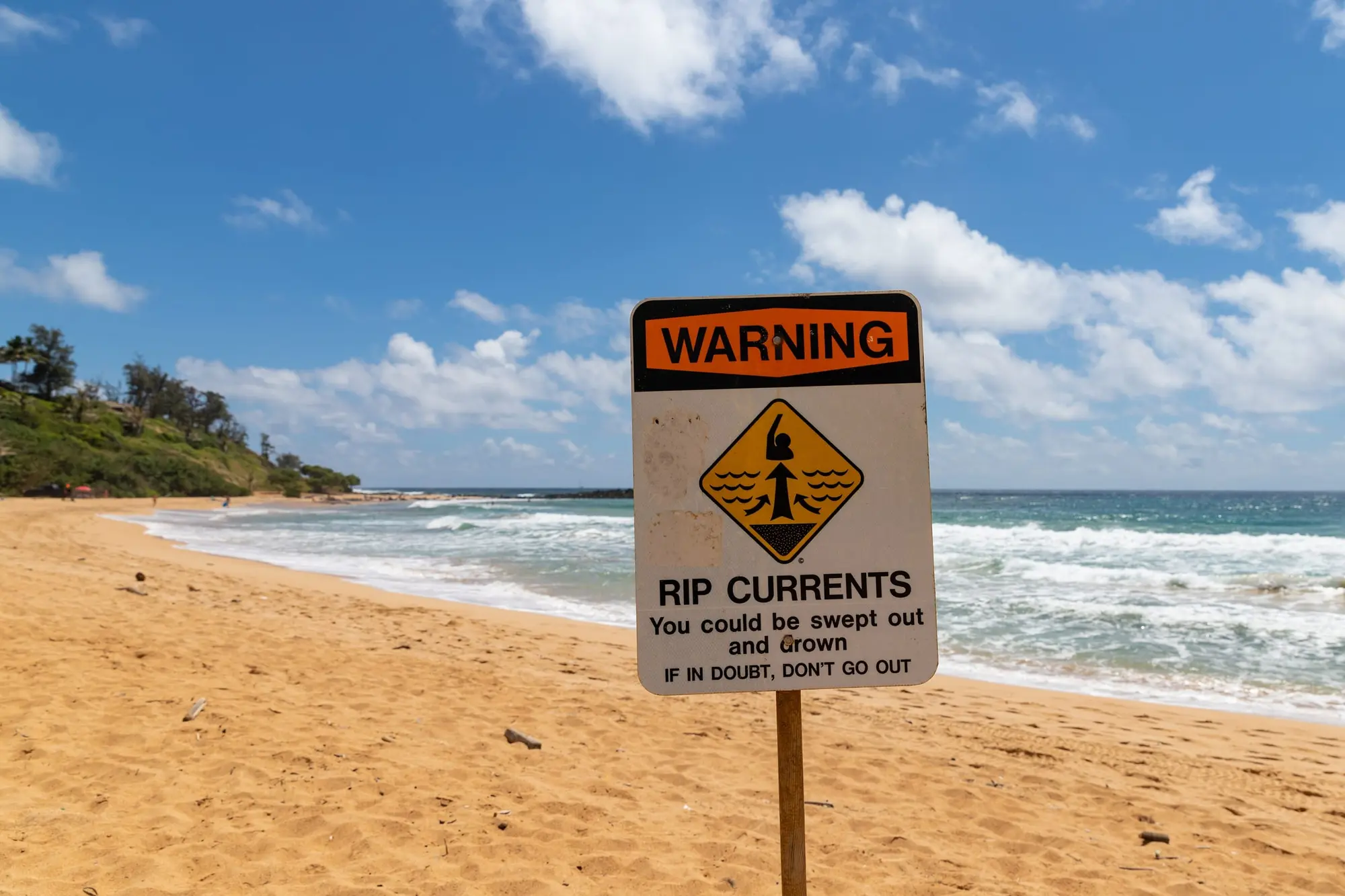
The signs. At guarded beaches safety officials post warning signs, and the photograph at the top of this page, taken at Keālia in 2018, is one of them. The Health Department’s key to the rest: Dangerous Shorebreak, waves breaking straight onto the sand; Strong Current; High Surf; No Swimming, posted for “extreme life-threatening conditions”; No Diving, where the water is shallow or of unknown depth; Sudden Drop-Off; Waves Break on Ledge; Slippery Rocks; Sharp Coral; Jellyfish & Man-O-War; and Shark Sighted. A missing sign does not mean a missing hazard, the department adds.
Currents, shorebreak, and what to do
Currents. Kauaʻi’s lifeguards and the state disagree on which current matters most. The lifeguard association’s rip current page opens: “rip currents are the main cause of drownings and rescues across the state.” The Health Department’s says rip currents “are not as prominent as other types of currents here in Hawaii,” where tidal, wind and other currents can run at any beach. Both reach the same advice: a strong current may not be visible, and the lifeguard knows where it is. To spot a rip from the shore, the lifeguards say, look for a flat, narrow, sometimes muddy streak where no waves are breaking, or a break in an even line of waves.
If a current takes you:
- Stay calm. “Currents will generally not pull you under the water,” both pages say.
- Do not swim against it. Swim parallel to the shore until you are out of it, then let the waves carry you in.
- If it is too strong, float and go with it, and save your strength.
- Signal for help: wave your arms and shout toward the shore.
Shorebreak. Where deep water meets the beach suddenly, waves break straight onto the sand. In Hawaiʻi the average wave height when a spinal cord injury happens is 3 feet, the Health Department says. Never dive into it head first: duck under the waves, and if one catches you, protect your head and neck with your arms. The lifeguards warn of shorebreak at Kekaha and, in winter, at Hāʻena.
If someone is in trouble. Call 911 first, and get others to help. The lifeguard association counts some 220 rescue tubes installed around Kauaʻi for a bystander to use until lifeguards arrive, and its instructions are strict:
- Use one only if you are a competent swimmer. If you cannot swim, do not go in.
- Call and yell for 911, and get other people involved.
- Pull the tube behind you, with fins if you have them, and pass it to the swimmer without letting them grab you.
- Kick across the current toward shore, and wait for the lifeguards.
Where the surf has knocked someone off the rocks or the sand, the Health Department’s rule is not to follow them: if it was strong enough to pull them in, it is already too dangerous for anyone but rescuers.
Snorkeling
Snorkelers are 40 percent of the people who drown on Kauaʻi, the lifeguard association’s snorkeling page says (the Poʻipū lifeguard in its video gives the same 40 percent for all of Hawaiʻi), and the Health Department says more visitors to Hawaiʻi drown snorkeling than doing anything else. Their advice together:
- Ask the lifeguard where it is safe to snorkel that day, and snorkel with a buddy.
- Go in the morning, when conditions are usually best, and avoid dawn, dusk and murky water.
- Float, and kick only when you need to; consider a snorkel vest or belt.
- Stay off the reef and away from rocks and shallow coral, where you cannot stand or tread water.
- Look up now and then to check you are not drifting out.
- If you feel dizzy, disoriented or a headache coming on, take the mask off and get out of the water.
On full-face masks the Health Department says there is not yet enough evidence of a direct increase in risk. It also lists the ways they may add one (harder to remove, rebreathing your own exhaled air), tells you to practice breathing and taking the mask off before you get in, and says not to use the OUSPT brand at all, after a federal safety warning in March 2026. Its other theories about what raises the risk: a flight in the past few days, since the change in cabin pressure may affect lung function for several days; asthma, diabetes or heart disease; fatigue; and poor swimming. Snorkeling tours on Kauaʻi has the south-shore trips for winter, and Poʻipū Beach the guarded snorkel from the sand.
Brown water, sharks and wildlife
Brown water. After heavy rain the rivers run brown into the sea, and the runoff can carry, in the county’s words, “sewage, bacteria, chemicals, and other pollutants.” The state Health Department issues Brown Water Advisories, and its advice holds with or without one: stay out of water that looks brown, cloudy or murky, for at least 48 to 72 hours after heavy rain has stopped. On 17 August 2026 a statewide advisory had the county advising no swimming or other ocean recreation at all.
Sharks. Bites are rare, and the state’s advice for avoiding one overlaps with everything above: stay out at dawn, dusk and night, and out of murky water, harbor entrances and stream mouths, “especially after heavy rains”; swim at beaches with lifeguards and follow their advice. When a shark is sighted, lifeguards warn the beach and post signs. Get out, and stay out.
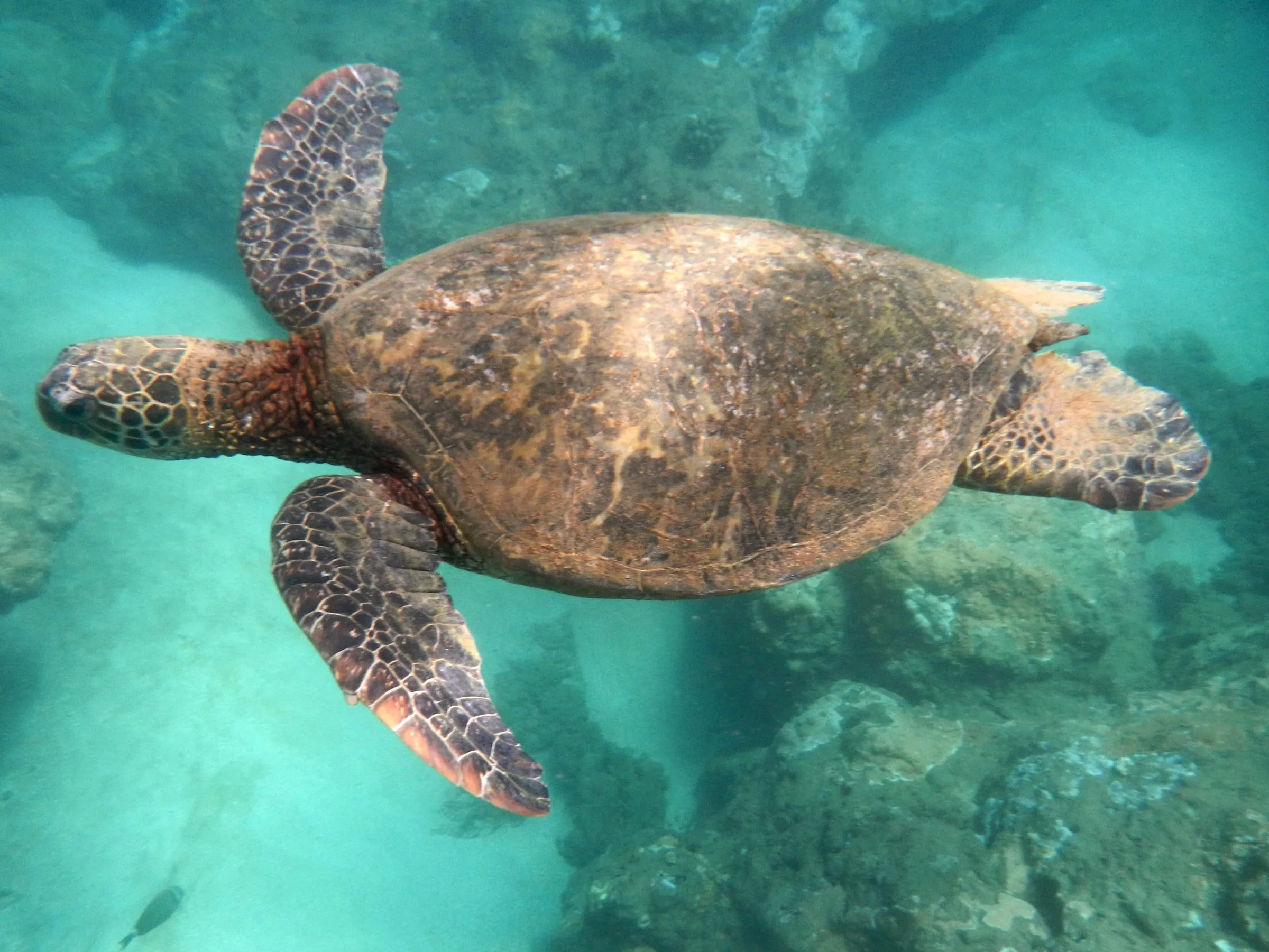
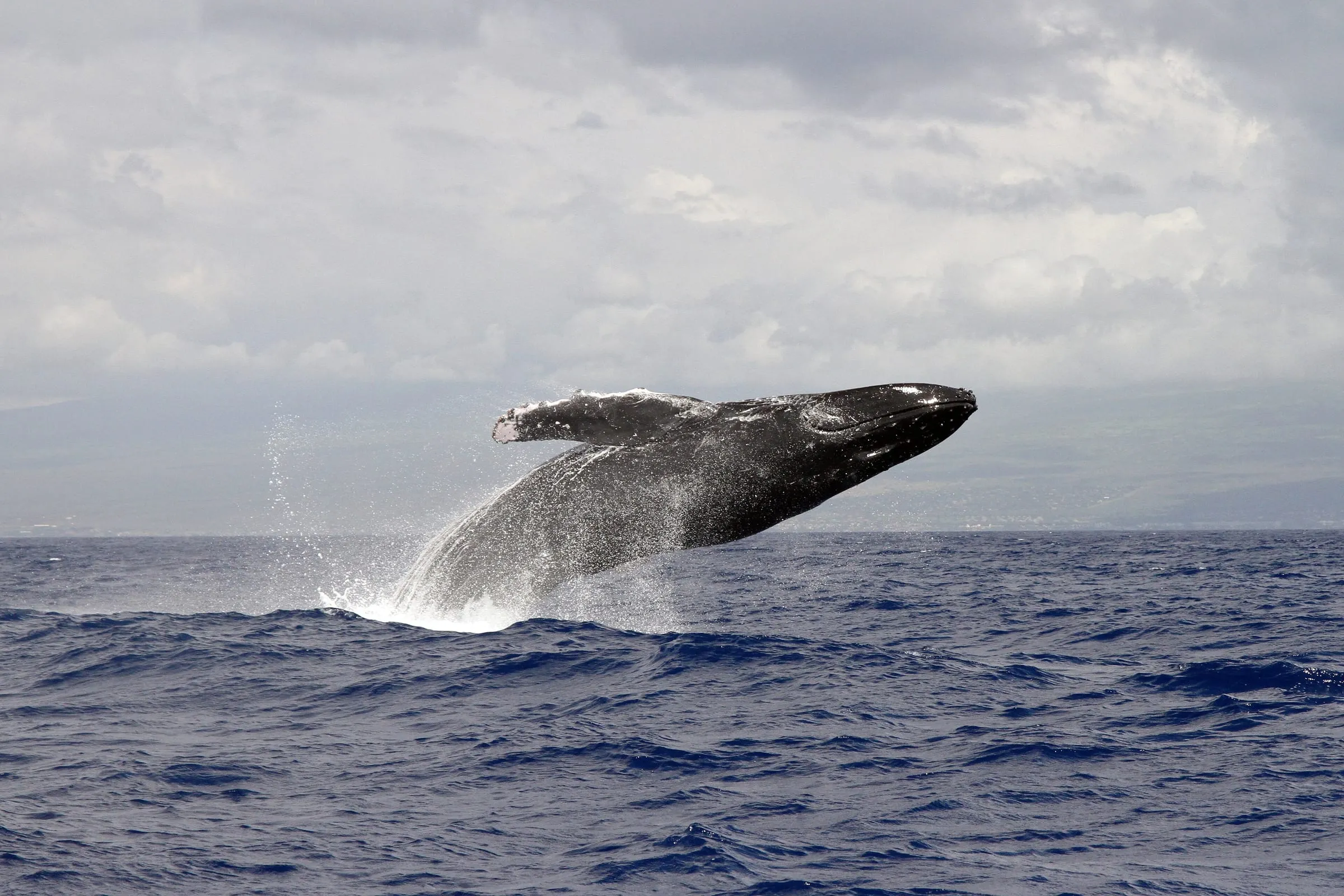
Seals, turtles and dolphins. Leave a monk seal or a turtle sleeping on the sand alone. NOAA’s distances: at least 50 feet from a Hawaiian monk seal, on land and in the water, and 150 feet from a mother and pup (hold a thumbs-up at arm’s length: if your thumb covers the whole seal, you are about 50 feet away); 10 feet from a sea turtle. Two are federal law: no swimming with, approaching or staying within 50 yards of a spinner dolphin, and no approach within 100 yards of a humpback whale, swimming included. For a seal or turtle that looks sick or hurt, NOAA’s Marine Wildlife Hotline is (888) 256–9840.